2026 Virtual Presidential Forum: The Latest Breakthroughs from MSK
This year's Virtual MSK Presidential Forum brought together leading MSK researchers to discuss the groundbreaking work they presented at the 2026 ASCO Annual Meeting.
Highlights
- The research highlighted during the Virtual MSK Presidential Forum demonstrated meaningful progress against cancers that have historically been among the most difficult to treat, offering people with these diseases more time, better quality of life, and new reasons for hope.
- Pancreatic cancer: A new KRAS-targeted therapy doubled survival for people with metastatic pancreatic cancer, marking a major breakthrough against a genetic driver long considered “undruggable.”
- Multiple myeloma: An antibody-based four-drug combination produced deeper, longer-lasting remissions than those gained from standard treatment, bringing researchers closer to the goal of finding a cure for multiple myeloma.
- Dedifferentiated liposarcoma: A targeted therapy slowed disease progression in people with a rare and aggressive sarcoma, representing the first major advance in decades for a disease that has seen little therapeutic progress in more than 50 years.
The American Society of Clinical Oncology (ASCO) Annual Meeting is one of the most influential global forums in cancer research, bringing together physicians and scientists from around the world to share discoveries that have the potential to change cancer care. At the 2026 meeting, which took place in late May and early June, nearly 100 faculty members, clinicians, researchers, and trainees from Memorial Sloan Kettering Cancer Center (MSK) presented their work, reflecting the breadth of innovation taking place across the institution. Our leadership was evident throughout this year’s meeting: Studies led by MSK investigators were featured in three of the five plenary presentations, ASCO’s most prestigious scientific sessions.

Two of these plenary presentations and one other high-profile talk were highlighted at a recent Virtual MSK Presidential Forum, hosted by Selwyn M. Vickers, MD, FACS, MSK’s President and CEO and Douglas A. Warner III Chair, and moderated by Ross Levine, MD, MSK’s Chief Scientific Officer and Edward P. Evans Endowed Chair for MDS. All reflect meaningful progress against diseases that have historically been among the most difficult to treat, an important theme emerging from MSK research.
These advances are helping people with these diseases live longer, experience better quality of life, and benefit from treatment approaches that would have seemed out of reach just a decade ago. While the studies presented at ASCO were defined by impressive scientific and clinical outcomes, Dr. Vickers emphasized what the results ultimately represent. “It means more life for our patients,” he said. “It’s more weddings, more soccer games, more family reunions — and more hope.”
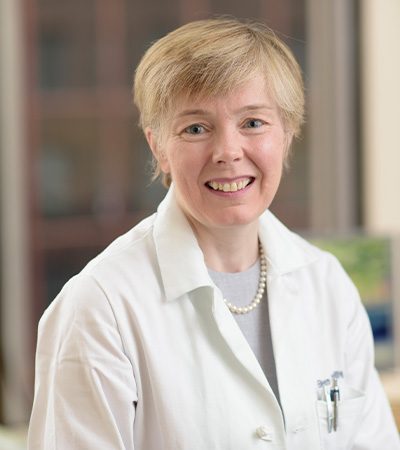
Making the Impossible Possible in Pancreatic Cancer
Pancreatic cancer is one of the most difficult cancers to treat. Researchers have long been searching for ways to target KRAS mutations, which drive more than 90% of pancreatic cancers. For decades, KRAS was considered undruggable, making it one of the most elusive targets in cancer research. Eileen O’Reilly, MD, Co-Director for Medical Initiatives at the David M. Rubenstein Center for Pancreatic Cancer Research and Winthrop Rockefeller Chair of Medical Oncology, presented results from a phase 3 clinical trial evaluating a new precision drug, daraxonrasib, which targets several KRAS mutations.
The results were astounding: Compared with standard chemotherapy, daraxonrasib significantly improved outcomes, doubling median survival to just over 13 months versus about 6 months with standard therapy. The treatment also helped shrink tumors and slow disease progression. People in the trial tolerated the side effects from the new drug better than those from chemotherapy, allowing many to maintain a higher quality of life during treatment.
Dr. O’Reilly described the findings as a major milestone for the field, noting that “KRAS is no longer undruggable. It’s targetable in a very meaningful way.” She and other researchers are optimistic that these results will lead to a new standard of care for pancreatic cancer. In addition, new studies are exploring how KRAS-targeted therapies can be combined with other approaches, including immunotherapy, and whether they can benefit people with earlier-stage disease. As Dr. O’Reilly noted, “This is just the start of what’s going to be a sea change in how we think about and approach this disease.”
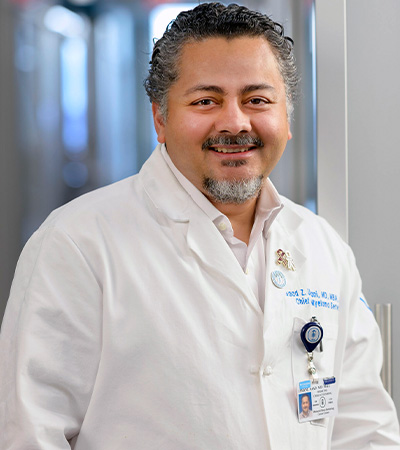
Combination Therapy Extends Remission in Multiple Myeloma
Just two decades ago, most people with multiple myeloma, a blood cancer that develops in plasma cells, survived only two to three years after diagnosis. Today, thanks to major advances in research, diagnostics, and treatment, many patients are living 15 years or longer. Researchers at MSK have helped lead many of these advances and are focused on the ambitious goal of making multiple myeloma a curable disease.
A key part of this effort is developing treatments that can reduce cancer cells to levels that are undetectable and keep people in remission for longer. Saad Usmani, MD, MBA, Chief of the Myeloma Service, presented encouraging results from a phase 3 clinical trial that show this approach is working. The study compared an antibody-based, four-drug combination treatment to the standard three-drug treatment in people with newly diagnosed multiple myeloma. After more than six years of follow-up, those who received the four-drug combination were more likely to achieve deep responses, remain free from disease progression, and stay in remission longer than those who received standard treatment. Importantly, many people treated with the newer regimen continued to do well years after diagnosis, suggesting that more durable responses can translate into longer survival.
These findings support the use of the four-drug combination as a standard treatment option and represent another important step toward the long-term goal of finding a cure for multiple myeloma, which Dr. Usmani is optimistic is on the horizon. Looking ahead, he described his vision for the future: “Maybe four or five years from now, once we’ve delivered treatment, I can shake my patient’s hand and say, ‘You don’t need to see me again.’”
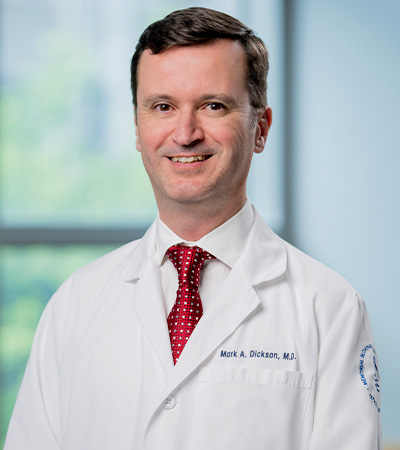
Targeted Therapy Slows Progression of a Rare Sarcoma
Mark Dickson, MD, an Associate Attending Physician in the Sarcoma Medical Oncology Service, shared potentially practice-changing results from a study evaluating the targeted therapy abemaciclib (Verzenio®) for people with a rare and aggressive soft tissue sarcoma called dedifferentiated liposarcoma (DDLS) that has spread or returned after treatment. DDLS is one of the most common types of liposarcoma, but treatment options for recurrent disease have remained largely unchanged for decades. Researchers have found that nearly all DDLS tumors rely on a protein called CDK4 to grow. Abemaciclib, which was first approved in 2017 to treat certain breast cancers, works by blocking CDK4, slowing cancer cell growth and division.
The phase 3 trial had 108 participants, with half receiving the drug and half a placebo. The drug halted the growth of DDLS for an average of 10 months — six times longer than the placebo. For people who received the drug as their first treatment, tumor growth was stopped for 16.5 months. The study also included remarkable individual success stories. Dr. Dickson shared that a woman in her 70s joined the trial after chemotherapy had failed and her symptoms were worsening. Within weeks of starting the new treatment, her symptoms had improved dramatically, and more than four years later, she continues to do well and has remained on the drug.
Dr. Dickson described the findings as “the first study that really moved the needle in this disease.” He expects that the results will lead to the treatment being offered more widely, providing new hope for people facing a disease with few effective treatment options. Reflecting on the research that led to the trial, Dr. Dickson noted, “If you have a good idea and you really persevere and build the right team, you can succeed.”
Looking Ahead
Transformative advances such as these are the result of years of scientific research, clinical investigation, and collaboration across disciplines. From targeted therapies that address some of cancer’s most challenging genetic drivers to treatment strategies that improve both outcomes and quality of life, MSK researchers continue to redefine what is possible for people with cancer.
These advances are made possible through philanthropy, which provides investigators with the resources and flexibility to pursue bold ideas. We are grateful for the partnership of the entire MSK Giving community, whose generosity helps fuel the breakthroughs that are shaping the future of cancer care.
Help fuel a future of new firsts

Support The MSK Campaign


The MSK Campaign: Leading Science. Changing Lives.
The MSK community is raising $6 billion by 2030 to accelerate advances across six key strategic initiatives. Learn more and join us in our mission of ending cancer for life.
Learn more about The MSK Campaign