Zuckerman Research Center Marks 20 Years of Discovery
A cornerstone of MSK’s research enterprise, the Mortimer B. Zuckerman Research Center celebrates two decades of impact with a new gift from the Zuckerman Family Foundation.

- For 20 years, the Mortimer B. Zuckerman Research Center has fueled discoveries that have transformed cancer research and care around the world.
- A new gift from the Zuckerman Family Foundation will expand laboratory and computational capacity, helping MSK scientists tackle the next generation of cancer research challenges.
- Breakthroughs from the ZRC have led to advances including Nobel Prize-winning immunotherapy research, new insights into cancer metastasis, and pioneering cell therapy innovations.
- By investing in cutting-edge technology, collaborative science, and exceptional talent, the ZRC will continue accelerating discoveries that improve outcomes for patients worldwide.
A legacy of discovery
Twenty years ago, Memorial Sloan Kettering Cancer Center (MSK) opened the Mortimer B. Zuckerman Research Center (ZRC), ushering in a new era of scientific progress and transforming the scale and ambition of MSK research. The building, made possible by a transformational gift from MSK Trustee Emeritus Mortimer Zuckerman, nearly doubled MSK’s research capacity and became a permanent home for the Sloan Kettering Institute (SKI), the Human Oncology and Pathogenesis Program, and the Louis V. Gerstner, Jr. Graduate School of Biomedical Sciences.
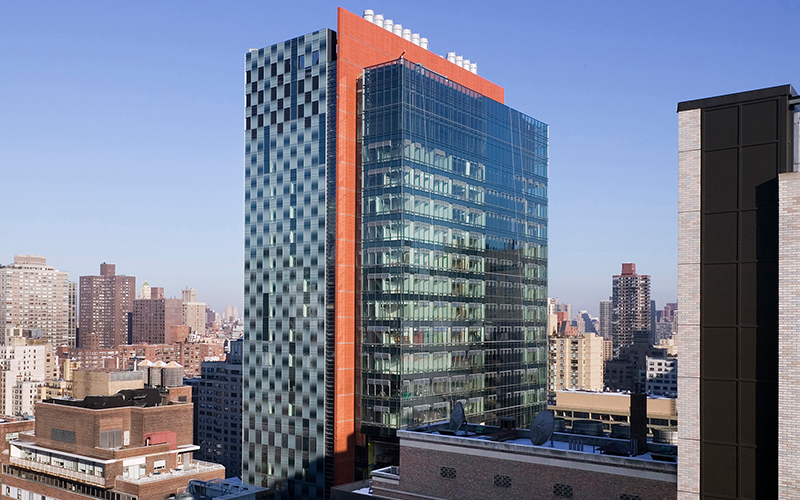
The ZRC remains at the heart of MSK’s research enterprise today. As the center marks its 20th anniversary, the Zuckerman Family Foundation is helping shape its future with a new gift to support renovations and expand laboratory and computational capacity.
“For 20 years, the Mortimer B. Zuckerman Research Center has been a place where talented people come together to ask difficult questions and pursue ideas that can change the course of cancer research,” said Selwyn M. Vickers, MD, FACS, President and CEO of MSK and Douglas A. Warner III Chair.
The ZRC was designed to bring together basic scientists, physician-scientists, and trainees to share insights and tackle complex problems. Its location across the street from Memorial Hospital placed researchers in close proximity to their clinical colleagues, strengthening the connection between laboratory research and new approaches to cancer care.
Over the past two decades, discoveries made within the ZRC have helped redefine how scientists understand cancer and how clinicians treat it. Research conducted in the building has led to advances that have reached patients around the world, demonstrating the extraordinary return on a visionary investment in science.
The ZRC was home to research that brought the first immune checkpoint inhibitor drugs to patients and won former SKI investigator James Allison, PhD, the Nobel Prize. It’s where gastrointestinal oncologist Karuna Ganesh, MD, PhD, and Joan Massagué, PhD, SKI Director and Marie-Josée and Henry R. Kravis Chair, discovered that cancer spreads by co-opting the same pathways that facilitate wound healing. The building also houses the clean rooms where MSK scientists have manufactured billions of engineered immune cells that help patients’ bodies find and fight their cancer. Together, these advances illustrate the power of a collaborative research community, where scientists build on one another’s work to generate critical insights and lay the foundation for future breakthroughs.
The work conducted within the ZRC has continued to shape cancer research and care well beyond the building’s walls. Since 2019, MSK researchers have contributed to more than 53 FDA approvals for MSK-held or MSK-led investigational new drugs. With every approval, MSK is one step closer to achieving our mission of ending cancer for life.
Building for the next generation of science
The scientific investigations that will define the future of cancer research demand new tools, new technologies, and new ways of working together. Scientists can now examine cancer at much greater resolution, investigate how tumors evolve, and use computational tools to approach questions that would have been difficult to study two decades ago. Those advances depend on infrastructure designed to support a rapidly evolving era of science.
With this new and transformational gift, the Zuckerman Family Foundation is helping ensure that the ZRC remains at the forefront of cancer discovery for the decade ahead. The renovation will create space for researchers to tackle some of the most urgent questions in cancer science, while providing the technological foundation needed to translate insights into real-world impact for patients.
Designed to fuel the next generation of breakthroughs, the renovated building will advance research in immunobiology and vaccines, precision oncology and innovative diagnostics, and computational and systems biology. Just as importantly, it will strengthen MSK’s position as a premier destination for exceptional scientific talent, creating opportunities to recruit and retain dozens of leading scientists in their field who will accelerate discoveries with the potential to transform outcomes for people with cancer worldwide.
“When my uncle Morti conceived of the gift to construct this building, the intention was to support the people working in it — the scientists and researchers pushing the boundaries of science and making a difference in society,” said Eric Gertler, Trustee of the Zuckerman Family Foundation and Executive Chairman and CEO of U.S. News & World Report. “That’s why we are so excited to extend Mort’s generosity with a new investment to upgrade the research facilities, ensuring MSK scientists have the tools to accomplish what hasn’t been done before and improve the standards of care to enable patients to move forward with their lives.”
Twenty years ago, Mort Zuckerman helped create a home for scientific discovery. Today, the Zuckerman Foundation Family’s generosity is defining what comes next. By investing in the people, technology, and ideas that will drive the next era of cancer research, the family foundation is sustaining the ZRC as a place where bold questions lead to breakthroughs that improve the lives of patients around the world.