Meet the 2025-2026 Andrew Sabin Family Foundation Fellows
Established in 2021, the Andrew Sabin Family Endowment and Initiative in Cancer Prevention at MSK provides support to young scientists with the goal of advancing environmental science and cancer research.
About the Andrew Sabin Family Endowment and Initiative in Cancer Prevention at MSK
Established in 2021, the Andrew Sabin Family Endowment and Initiative in Cancer Prevention at MSK provides support to young scientists with the goal of advancing environmental science as well as cancer research.
MSK is uniquely positioned to lead a transformative era in research in cancer genetics and genomics. Our scientific and clinical talent are paving the way to more cures that will change the way that patients everywhere live with and beyond cancer.
The Sabin Family Foundation Fellowships provide crucial funding at a stage in the recipients’ academic and research careers when such support can have the greatest impact on their transition to becoming independent investigators. “By investing in emerging talent, we hope to expand our programs in cancer genetics to discover new approaches to targeted prevention,” says Kenneth Offit, MD, MD, Robert and Kate Niehaus Chair in Inherited Cancer Genomics and Chief of the Clinical Genetics Service, who oversees the program.
We are pleased to welcome our two selected 2025–2026 Andrew Sabin Family Foundation Fellowship recipients. These talented researchers are focusing on the prevention and early detection of cancers caused by genetic and environmental factors.
The 2025-2026 Andrew Sabin Family Foundation Fellows
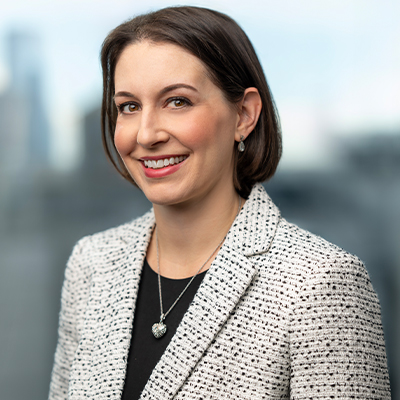
Lauren Banaszak, MD
Dr. Banaszak, a medical oncologist and hematologist who specializes in the care of people with leukemia, has a special interest in caring for people with an inherited risk for cancer. In a dedicated genetics clinic, she provides genetic counseling and testing for individuals with an elevated cancer risk due to their family history.
In her research, Dr. Banaszak is seeking to uncover new pathways that predispose individuals to blood cancers such as leukemia and lymphoma. She works with patients and their families to apply leading-edge genetic sequencing techniques to identify new genes that raise the risk of these diseases. Her ultimate goal is to translate these molecular findings into improved screening, diagnostic, and treatment strategies for people with an inherited risk of hematologic malignancies.
After earning her medical degree from Cleveland Clinic Lerner College of Medicine, Dr. Banaszak completed an internal medicine residency and hematology-medical oncology fellowship at the University of Wisconsin–Madison. There, she received several awards, including the Fellow Outstanding Research Award and the Outstanding Fellow Award, as well as the position of Chief Resident.
Shiv Prakash Verma, PhD
Dr. Verma is a Senior Research Scientist at MSK who is exploring genetic modifiers of breast cancer risk in people with inherited BRCA2 mutations. He is conducting this work in Dr. Offit’s lab. In a recent study, Dr. Verma and his fellow researchers uncovered a promising new lead in understanding how BRCA2 mutations may drive breast cancer. They identified 24 genes that may be influenced by BRCA2 mutations — one of which, STARD13, plays a key role in controlling how cells grow and spread.
Current findings suggest that the STARD13-LATS1/2 pathway may be critical to understanding how BRCA2-related cancers grow. With further research, Dr. Verma's discoveries could help guide new therapies or inform risk-reduction strategies for people in the general population.
Dr. Verma earned his PhD in cancer biology from Banaras Hindu University in Varanasi, India, as well as an MSc in biotechnology from Maharaja Sayajirao University of Baroda, Gujarat. He pursued postdoctoral training at the University of Utah, where he focused on the TFE3 translocation, a rare and aggressive genetic alteration observed in several types of cancer. He received a Young Investigator Award from the Connective Tissue Oncology Society for this work. Dr. Verma is highly skilled in various molecular biology, biochemistry, and biotechnology techniques and enjoys training and mentoring laboratory staff.
The 2024-2025 Andrew Sabin Family Foundation Fellows
Mohammad Ali Abbass, MD
Dr. Abbass joins MSK as an Assistant Attending Physician in the Clinical Genetics Service and an Assistant Attending Surgeon in the Colorectal Service. His research focuses on preventing colon cancer and detecting it at its earliest stages using molecular markers.
After earning a medical degree from Damascus University, Dr. Abbass completed his general surgery residency, colorectal surgery fellowship, and The James Church and Sheetz Family Endowed Clinical Fellowship in Hereditary Colorectal Cancer Syndromes at the Cleveland Clinic Foundation. He joined the Northwestern University Feinberg School of Medicine as Co-Medical Director of the Graduate Program in Genetic Counseling and Northwestern’s Robert H. Lurie Comprehensive Cancer Center as a cancer liaison physician at the American College of Surgeons Commission on Cancer. Dr. Abbass is on the Program Planning Committee for the Collaborative Group of the Americans on Inherited Colorectal Cancer, the Research Foundation and Young Researchers Committee for the American Society of Colon and Rectal Surgeons, and the Colorectal Cancer Screening Panel for the National Comprehensive Cancer Network.
Sanchari Bhattacharyya, PhD
A senior research scientist in MSK’s Clinical Genetics Service, Dr. Bhattacharyya’s research focuses on understanding the biology of breast and prostate cancers, specializing in genomics, oncology, precision medicine, and transcriptional regulation, the process by which cells control gene expression. She is now studying the polygenic risk scores, which estimate a person’s likelihood of developing a disease based on their genetics, of genome-wide single nucleotide polymorphisms that modify the germline BRCA2 mutation and early-stage or normal prostate biopsies to understand the risk of metastasis.
Earning her PhD at the Albert Einstein College of Medicine, Dr. Bhattacharyya has experience in both academic and industry settings, working on advanced cancer epigenomics and oligotherapy, a therapeutic approach that uses trace elements, such as minerals and metals, to treat cancer by correcting imbalances in the body’s biochemistry. She also specializes in developing organoids, three-dimensional structures derived from a person’s cancer cells that are created in the lab and used to reveal insights about the origin and progression of disease.
Andrew Marderstein, PhD
Dr. Marderstein specializes in computational approaches to reveal the cellular and molecular mechanisms driven by genetic factors. Following his undergraduate studies at Cornell University, Dr. Marderstein earned a PhD at Weill Cornell Medical College and completed his postdoctoral fellowship at Stanford University. While at Stanford, Dr. Marderstein published in Nature the largest single-cell multi-omic data set of fetal blood development, studying why children born with Down syndrome have a 150-fold increased risk of developing childhood leukemia or elevated red blood cell counts. He further developed new deep-learning approaches to interpret the noncoding genome, while leading computational and organizational initiatives within multiple NIH consortiums. He is concluding a three-year term as Co-Chair of the American Society of Human Genetics’ Career Development Committee, where he has championed resources for advancing the next generation of geneticists.